

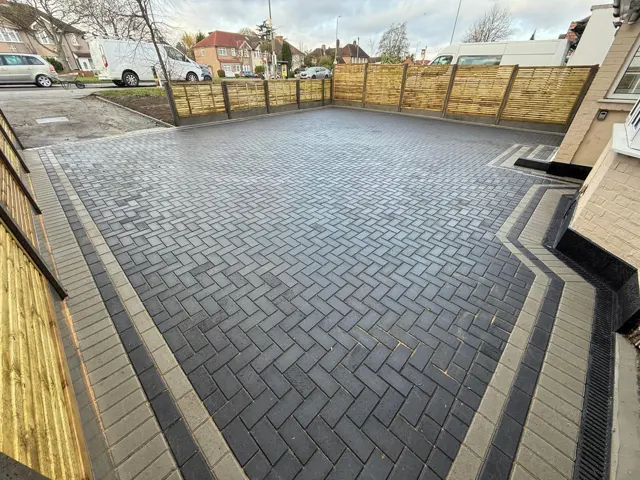
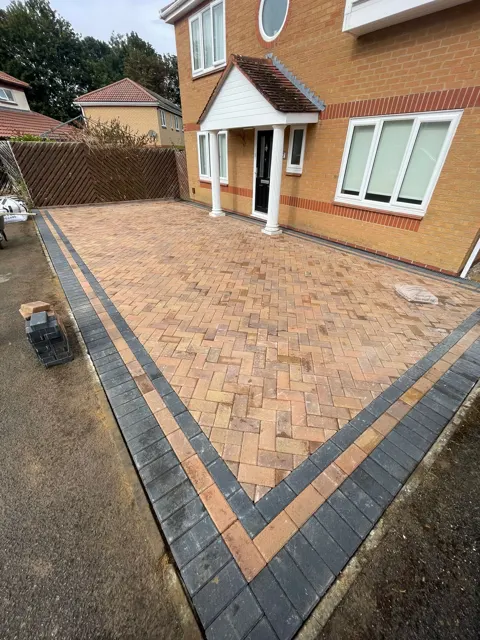
Herringbone pattern
Blocks interlock at 45° or 90°, which resists the turning and braking forces of cars. The strongest pattern for driveways.
North Landscaping and Driveways installs block paving driveways across North, Northwest and West London and Hertfordshire. We dig out the old surface, build a compacted sub-base, lay your chosen blocks and pattern, and fit drainage where it is needed — all with our own team and a free, no-obligation quote.
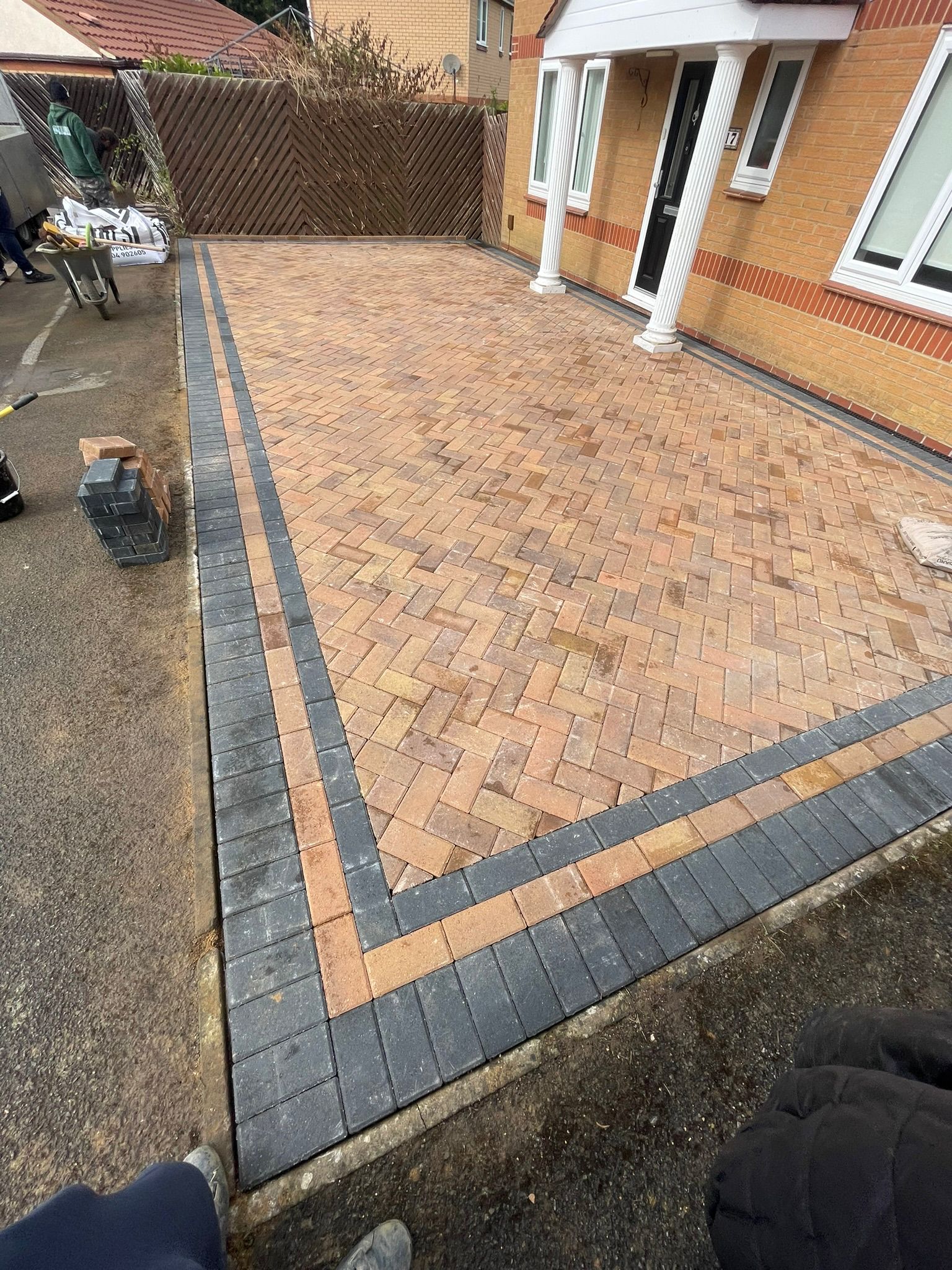
Block paving is the most popular driveway choice in London and Hertfordshire for good reason: it is strong enough for daily parking, comes in a huge range of colours and patterns, and individual blocks can be lifted and replaced if they are ever damaged.
What makes a block paving driveway last is the part you never see. We excavate to the correct depth, lay and compact a proper sub-base, set firm edge restraints, and make sure surface water has somewhere to go. That is the difference between a driveway that stays flat for decades and one that sinks and spreads.
Blocks interlock at 45° or 90°, which resists the turning and braking forces of cars. The strongest pattern for driveways.
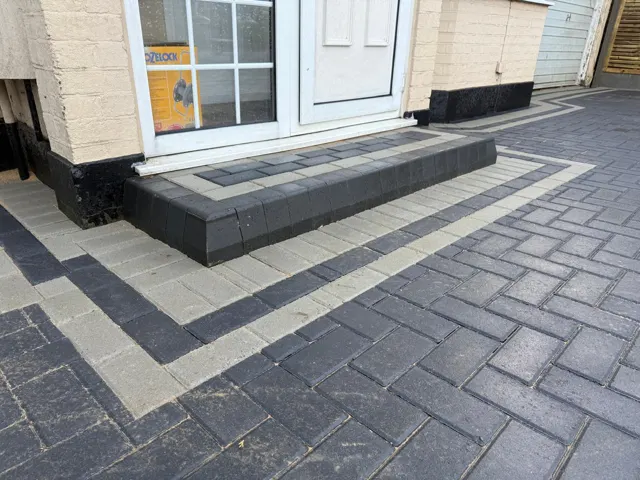
A charcoal or silver soldier course frames the driveway and gives it a sharp, finished look.
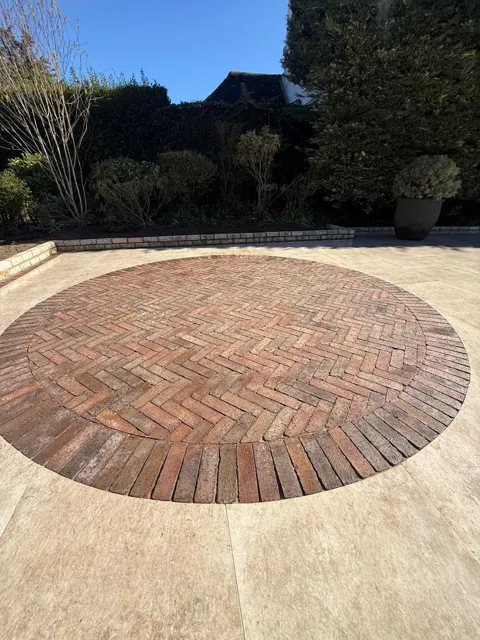
Curved edges and inset circles add character to larger driveways and front gardens.
Lets rainwater drain through the joints into the sub-base, which helps avoid the need for planning permission on front gardens.
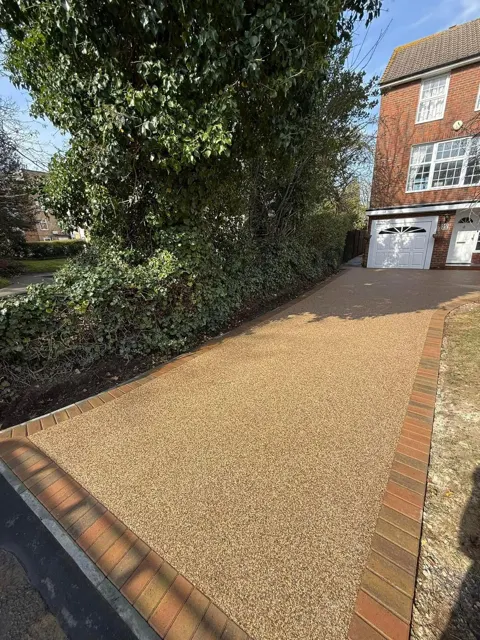
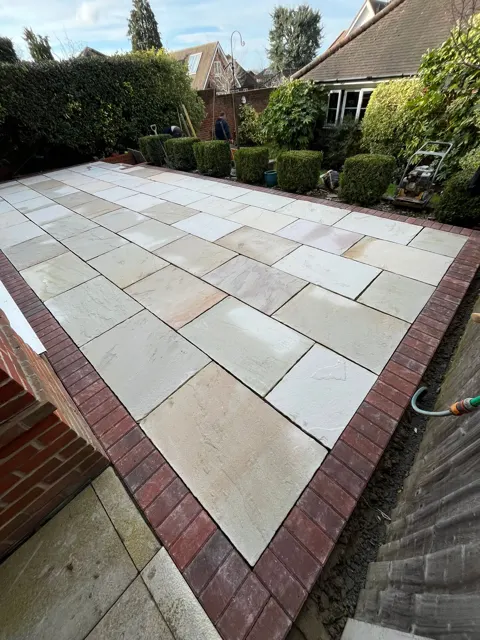
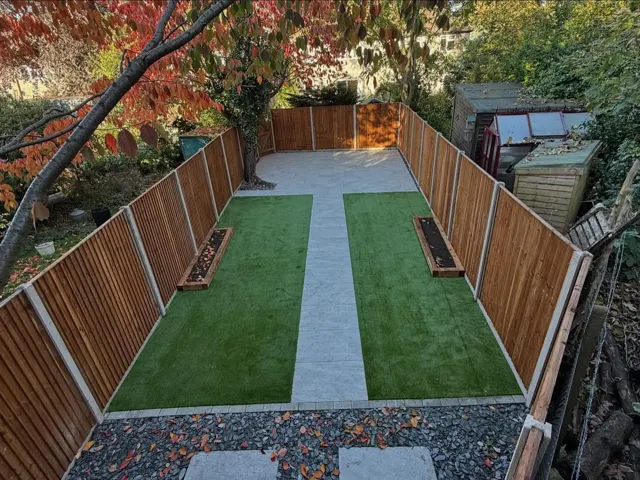
Photos of our own completed jobs. Tap to view full size.
See the before and after, what we did and where.
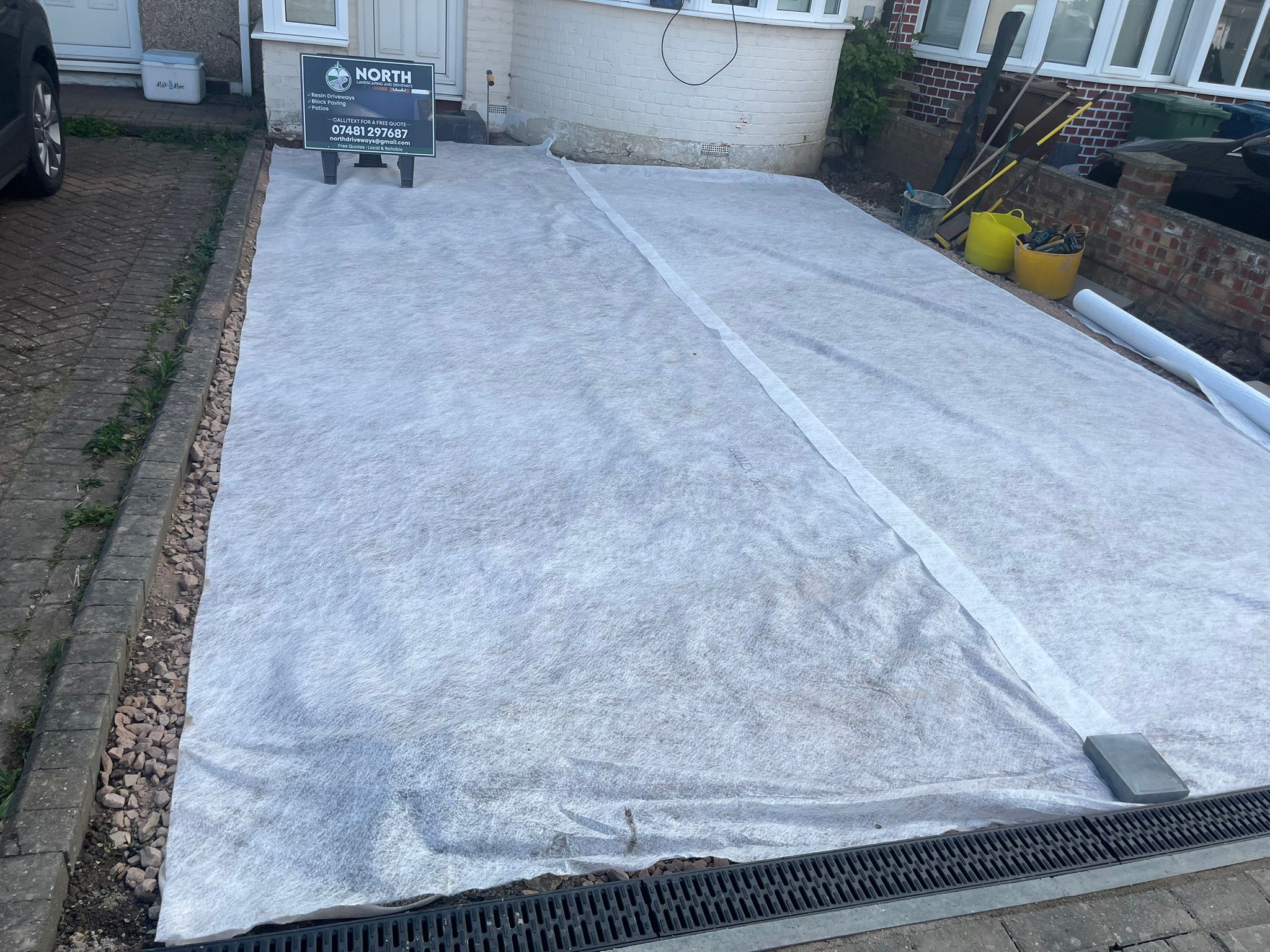
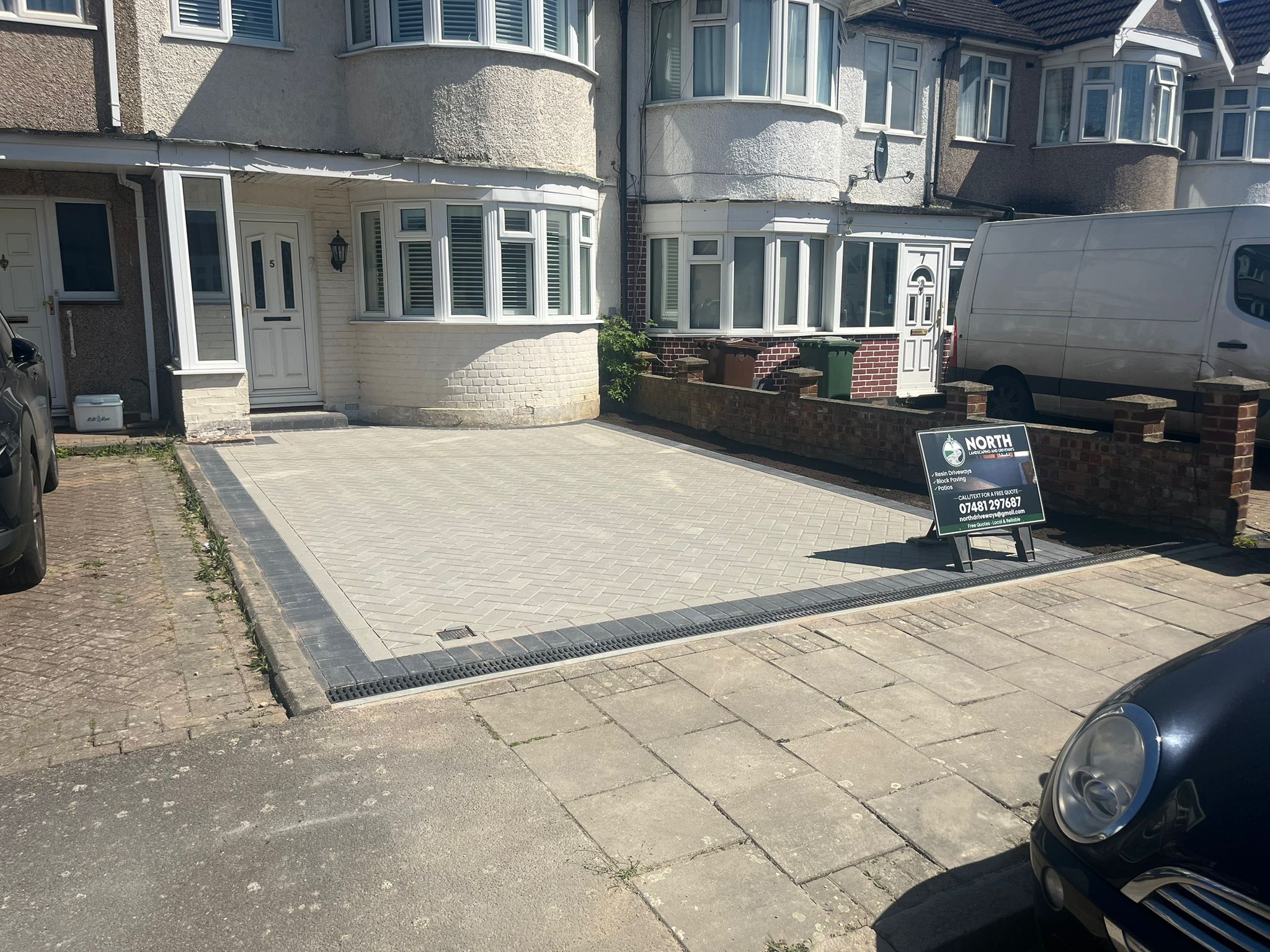
An old, cracked concrete driveway in Barnet replaced with buff herringbone block paving, a charcoal border and a new ACO drainage channel.
View project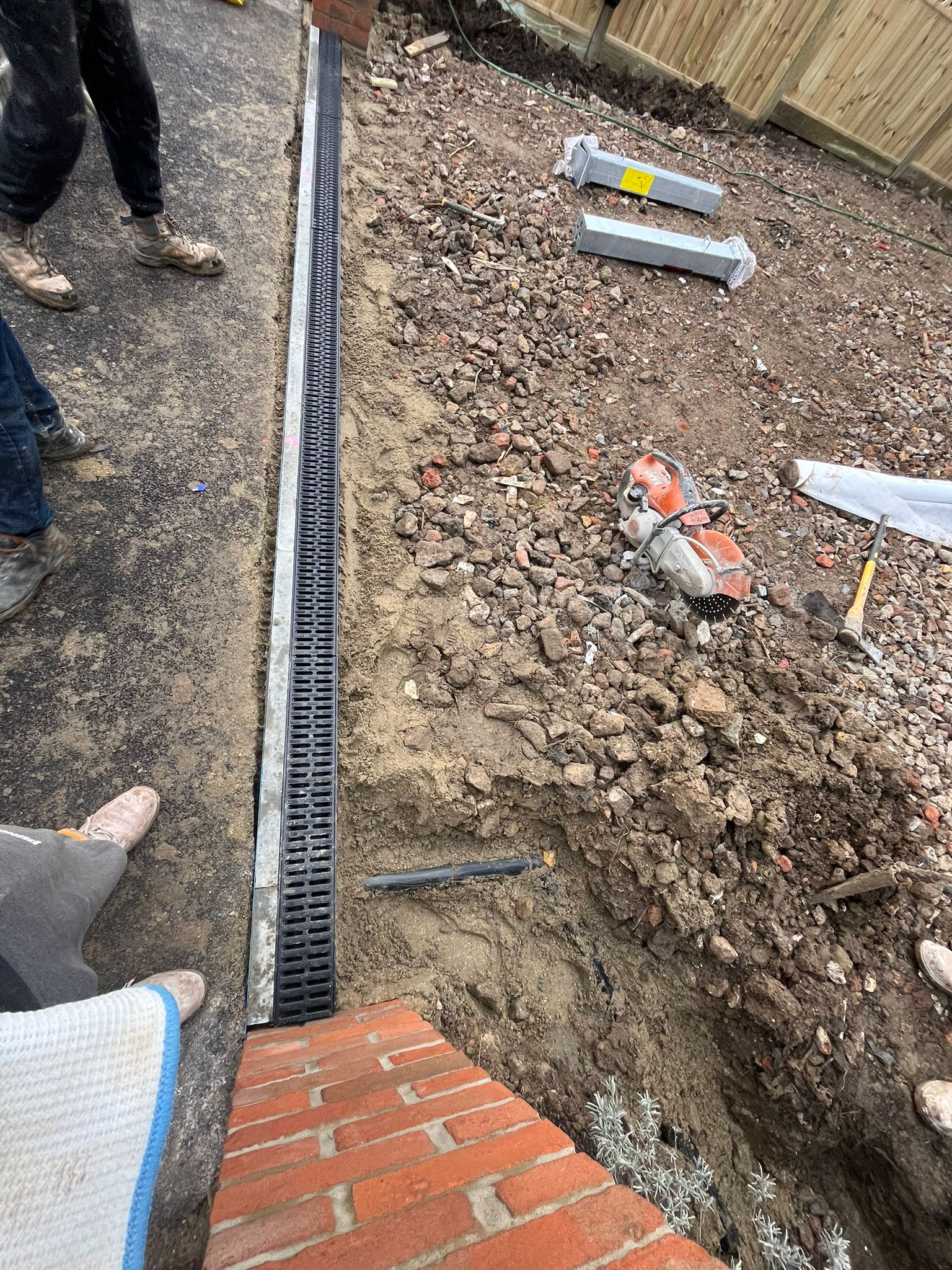
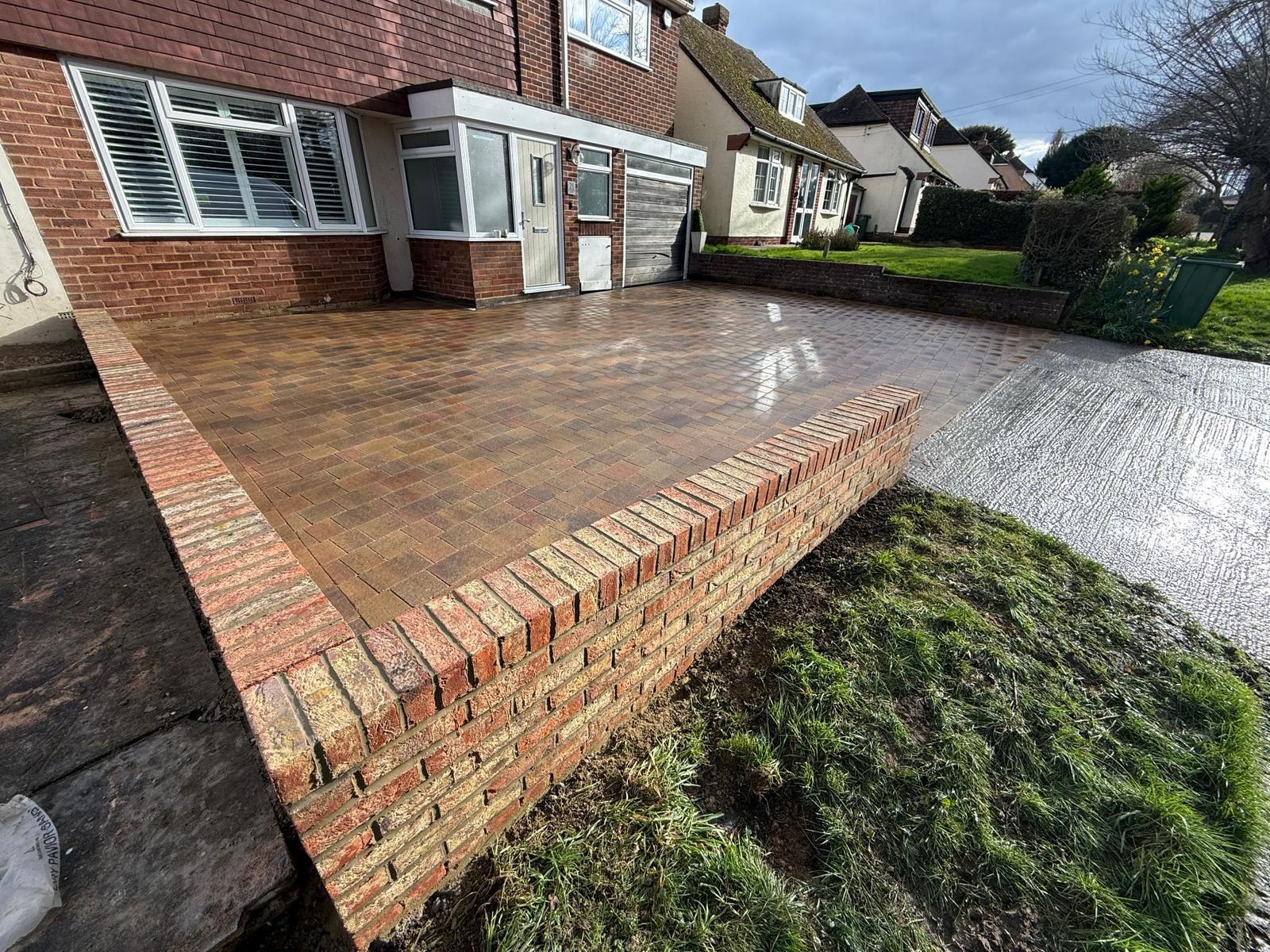
A raised brindle block paving driveway in Borehamwood, built from the ground up with a brick dwarf wall and a drainage channel.
View projectFour simple steps from your first call to a finished job.
We come out, measure up, look at levels and drainage, and talk through materials and designs with you.
You get an itemised quote with a timeline, so you know exactly what is included before anything starts.
Our team does the groundwork, build and finishing — keeping the site tidy and you updated throughout.
We walk you round the finished job, clean everything down and give you aftercare advice. All work is guaranteed.
Most block paving driveways take 3–5 days. Larger driveways, or jobs that need extra excavation, steps or drainage, can take longer. We confirm the timeline in your written quote.
Usually not. In England, a new front driveway over 5 square metres needs planning permission only if it uses a non-permeable surface that drains onto the road. Permeable block paving, or draining the water into a lawn, border or soakaway, avoids this.
Herringbone is the best pattern for driveways. Because the blocks interlock in a zig-zag, it resists the twisting and braking forces from cars far better than stretcher bond or basketweave, so the surface stays tight and level for longer.
A properly built block paving driveway can last for decades. Its lifespan depends mostly on the sub-base and edge restraints underneath, which is why we never cut corners on groundwork.
Yes. One of the big advantages of block paving is that individual blocks can be lifted and replaced without disturbing the rest of the driveway.
Sweep it regularly, remove weeds from the joints, and jet wash on a low setting once or twice a year. Top up the joints with kiln-dried sand if they wash out. Sealing is optional but helps resist stains and weeds.
Book a free site visit and get a clear, written quote — no obligation.